Showing posts with label tutorials. Show all posts

Sunday, February 3, 2013

DIY Window Herb Garden

I love cooking with fresh ingredients so have had setting up a herb garden on my to-do list for a while.

In the past my herbs have sat outside, but this usually results in them getting feasted on my the punk teenage possums that live in the tree next door.

This time round I hatched a plan to keep my herbs possum-safe and close at hand for when I am cooking.

I don't have much space in my kitchen so getting the pots up off my counter was essential. This is a very easy project and I finished it in a couple of hours.


Step 1

Measure up your window and cut a piece of dowel to fit. Make sure the dowel is thick enough to bear the weight of the plants you are going to hang there.


Step 2

Measure out the number of hooks you will need for your pots and space them out out evenly. Cup hooks are easy to screw in by hand. To make it easier hammer a guide hole (usually only 2-3 taps then take the nail out) and use pliers to twist the hook in once it gets too tight for you.

Alternatively you can use s-hooks - no screwing in of hooks necessary!


Step 3

Measure up your window sill how high you want your pots. Remember your pots will hang lower than the dowel and you want them to be at a comfortable height to access the pots, but not so low they are in your way - especially if they are over your sink.

Drill in curtain brackets on either side of the window and place your dowel in the brackets.


Step 4

You can purchase pots that are designed to be hung from hooks, but if you don't have these you will need to drill your own holes. Ensure the hole is big enough for your hook and they are in the same place on each pot to keep them hanging straight.

Steer clear of ceramic or glass pots (if you are drilling your own holes) as you are likely to have a broken pot instead of one with a hole in it. I used galvanised metal pots from ikea, but you could also use plastic ones.


 Step 5

Pot up your herbs in pots that will fit inside your hanging pots. You don't want to pot them straight in there for a couple of reasons:

1. You won't have drainage (believe me, you don't want your pots dripping water all over your kitchen) so your herbs will get way too soggy and will die.

2. While your herbs will do well in a sunny window eventually you are going to have to give them a holiday outdoors. Or if they are annuals you will just compost them and replace. This is much easier if you can just take the interior pot out.


Ta-da

Now you have your kitchen herb garden. I have been using my fresh herbs regularly in my cooking and nothing tastes as good as food you have cooked with fresh herbs, especially ones you grew yourself.


Some tips - I have got another group of herbs outside (in a place where the possums can't get them) ready to swap over when my indoor herbs are ready to replace. This rotation schedule makes it easier to keep your indoor kitchen herb garden looking fresh all year round.


Thursday, January 3, 2013

Baking Day - Low Fat Dog Biscuits

Last year I made my puppy Peanut Butter dog bikkies and after Christmas she put on about 5 kilos. So this year I decided I should go for a low fat option.


Low Fat Oatmeal & Wheatgerm Dog Biscuits


Ingredients
  • 2 cups wheat flour
  • 3 cups oatmeal
  • 1/2 cup wheat germ
  • 6 tablespoons low fat margarine
  • 1/4 cup golden syrup (or molasses)
  • 1 cup evaporated milk
  • 1 cup water
Method

1. Preheat oven at 160'c and line 2 baking trays with baking paper.

2. Mix wheat flour, oatmeal and wheatgerm together in a large bowl.

3. Then mix in margarine, golden syrup, milk and water.


4. The dough will be stiff to stir. Cover with a tea towel and let rest for 1/2 hour.

5. Roll teaspoons of the mix into balls and place on baking trays. The don't spread too much so don't panic about spacing them out. Flatten with a fork. 


6. Bake for 1 hour rotating 1/2 way through. Cool on a wire rack.


Happy baking.


Tuesday, December 4, 2012

Pinterest Road Test - DIY Clay Decorations

Clay Christmas Decorations from The Woodside Kitchen

The Woodside Kitchen's
original clay decorations
I've been looking for a good bake at home clay recipe for a while. The last time I made salt clay, my dog ate the decorations right off the tree. So finding one that didn't appear edible was a good thing, and corn flour and bicarb soda does not sound appealing to me. 

So first things first ingredients...

The Woodside Kitchen gave the ingredients as Cornstarch, Baking Soda and Water, but there was a lot of discussion in the comments about the decorations cracking or staying rubbery which comes down to some different names for ingredients depending on where you are. What you want to use is:

1/2 cup of Corn Flour
1 cup of Bicarb Soda (or Baking Soda - basically needs to be sodium bicarbinate)
3/4 cup of water

Ensure you are using the correct ingredients otherwise you will not get a hard clay decoration or you may get cracking.


 The mixing together is very easy. Just put it all in a saucepan, stir together then heat over low-medium heat.


There were some questions about whether you could do this in the microwave... I did not test this, but if you are going to give it a go only heat it in small increments (20-30 seconds) at a time, and stir in between. If you try this, please let me know.

It's done when it becomes stiff and silky (like smooth mash potatoes to borrow The Woodside Kitchen's term)

Scoop it out into a clean bowl and cover with a damp cloth until it cools slightly so you can knead it.


I left it for about 15 minutes and it was still warm when I kneaded it (I was impatient) but you can wait longer, especially if you are giving it to your kids to knead and want to make sure they don't burn themselves. The damp cloth will stop it from drying out in the meantime.

Sprinkle some more cornflour on the bench or breadboard (easier cleanup) and knead out as you would any dough. Mine was quite sticky so used more cornflour to keep it doughy. The kneading and rolling out is lots of fun (and cleanup is very easy) so feel free to let your kids have fun.


Roll out to 1cm high then cut with cookie cutters, or mould into whatever shape you want. I also did coin size disks that I intend to paint up and stick magnets on the back. I'm also replacing my tree star that my dog ate ;) which I moulded by hand.


Lay your decorations out on a tray with some baking paper. I skipped putting corn flour on the paper and regretted it - they all stuck and I had to sand the paper off, so don't forget that!

If you are planning to hang these on your tree, remember to poke a hole in them for your ribbon (I used a chopstick). I also pressed little circles around the edges, but you could do anything to decorate, or keep them plain for painting.


Pop them in the oven to bake. Here's another point that comes up when sourcing recipes the world over... The Woodfire Kitchen says 1 hour at 175', but I suspect this is Fahrenheit (which would be 80'c) As I cooked mine for only 1/2 hour at 175' and they were rock hard I suspect this is the case. I'll test again at 80'c and see how they go. If you beat me to it, please post in the comments!

The Woodfire Kitchen recommends flipping them over half way and this would stop any bubbling or cracking - and give a nice even finish. As I said, mine were rock hard 1/2 hour in so I just took them out. I had some bubbles and a few small cracks, but nothing worth worrying about.

One thing I did do was give them all a quick sand to clean up the edges and take off any imperfections, which I think made all the difference.

Now time for painting!

I gave them 2 coats of white acrylic then painted some lovely Scandinavian designs in red. You could also finish them all off with a coat of lacquer to give them a nice gloss finish.


Overall a pretty easy project, but I'm glad I did a quick Google search to confirm ingredients before I started as they could have gone very wrong without that clarification.


Have you tried this project? Let me know how you went.

Road Test Results

Ease - I'd put this as low-medium difficulty. There was some confusion about the ingredients but with a quick Google search I got to the bottom of these
Time - A bit time consuming. All up about 6 hours as you have to wait for baking time and drying time between each coat of paint. But this is up to you as to how much effort you put in.
Ability - Beginners can do this project quite easily. However if you aren't used to painting details keep this to a minimum. Try block colours or even use stamps.
Cost - Cheap as free. I had cornflour and bicarb in my cupboard. But even if you had to buy the supplies you could get away with this project for around $5.
Cleanup - easy, the uncooked clay dissolves in water so can easily be cleaned up. I would tip any extra on a patch of garden you don't mind much about though as it may clog up your sink.


Links

Original Inspiration - The Woodside Kitchen
Pinterest Inspiration Pin - Cornstarch & Baking Soda Clay Christmas Decorations

Sunday, December 2, 2012

Happy December | Snowflake Curtain DIY

Happy December everyone!


We are now officially on the count-down to Christmas. I can tell because Pinterest is full of Christmas cookies and elf on the shelf ideas, the shops are starting to go mental and the temperature in Brisbane has gone through the roof.

With only four weeks until Christmas I'm on a mad rush to get all my presents in order and because I love handmade and am a poor uni student there is a lot of crafting going on in my house at the moment. So I'm going to share some of my projects over the coming weeks. I'm also introducing a new section called 'Pinterest Road Test' where I take some of the most popular Pinterest DIYs and put them under my DIY scrutiny... should be fun!

So to kick things off I'm starting with one of the decorating idea I found on the pinning site...

Snowflake Curtain

This project was inspired by Bugs and Fishes. This pin is going crazy at the moment, and was too beautiful not to use, even though snowflakes are about the furthest thing away from Christmas in Brisbane.

I'm sure you remember making snowflakes as a kid. I never seemed to got the hang of it so they always fell apart. Luckily I have a bit more manual dexterity these days, so cutting out snowflakes wasn't as traumatic as I remember it.


I started by following some design patterns I found online (here), but after a about a dozen I just went for it with my own designs. 

This project is a little time consuming but it was something that could be done easily while watching TV so didn't feel like a major time commitment. I think I might make this a regular Christmas task and add more every year, as I can imagine that the more you have the better the effect.

Road Test Results

Ease - This is a super easy project that can be easily replicated. 
Ability - You don't need any special skills or ability, this is a child friendly Pin!
Cost - Dirt cheap. I didn't spend any money, just used some paper I had lying around the house


Links

Original Inspiration - Bugs & Fishes
Snowflake Patterns - Marcel's Kids Crafts
Pinterest Inspiration Pin - Easy peasy snowflake curtain

Friday, October 19, 2012

Fun With Hot Water Bottles

I love hot water bottle covers. Which is odd, because I live in the Sub-Tropics. Brisbane only get's about 2 weeks a year that you would need a hot water bottle cover. But I love to make them - I think because it's something fun that everyone can enjoy, not just kids.

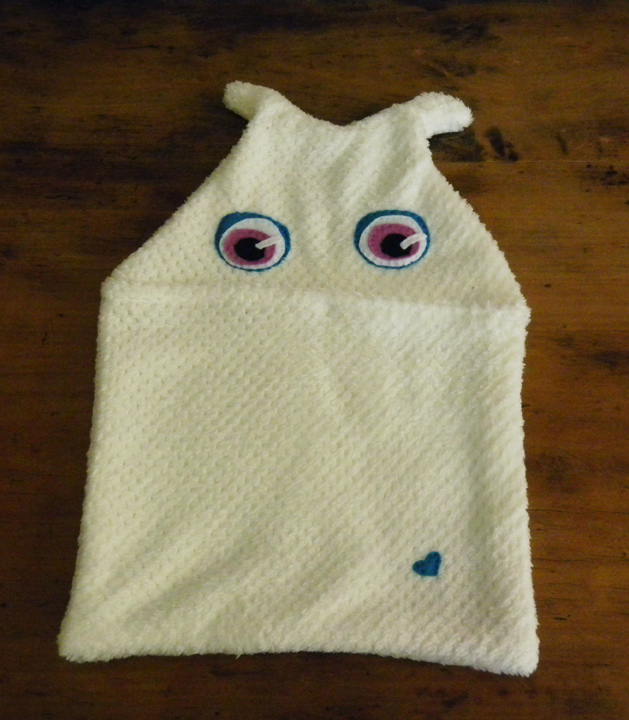
Here's some of my favourites that I've made...


So monsters have been my major love - which I guess is because they really let you go nuts on creativity. But just the other day I had someone ask me if I could make a raccoon for them.

I'm not the type of person to say no to a challenge - I actually love making new things - so here's my steps to making a raccoon hot water bottle cover.


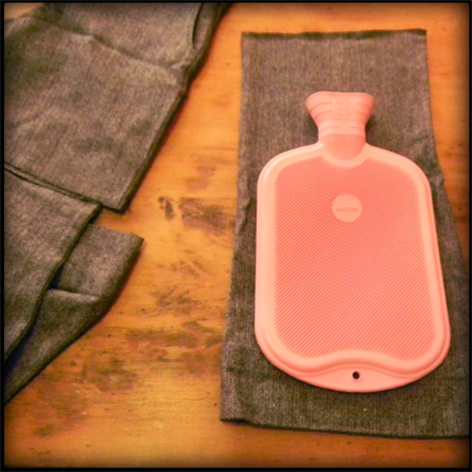
I made this little guy out of pre loved fabric - some herringbone pants that were useless as pants, but still had heaps of fabric in the legs to work with...


Step 1 - cut off enough from one of the legs to fit the water bottle.


Step 2 - I marked up the basic shape of the ears with chalk then cut out the design.
Note - leave a little extra fabric (about 2 inches) at the bottom of the back piece (that isn't cut). That way you'll have enough fabric in the mouth so that it stays shut when there's a hot water bottle in there.

Step 3 - Hem the two edges of the open mouth. I used a zig-zag stitch for this to prevent any stray threads getting away.

Step 4 - Sew the head onto the back, then sew the bottom on - remember you should have some overlap from the head onto the bottom of the body. Now you can turn this the right way out.


Step 5 - Go to town on your design. I use felt and just add shapes as I think it needs it. This is part of the reason why I sew them on after I sew the body together. If you want to, add these features before step 4. Also, I'm an illustrator by heart so I like to play around with shapes with it all laid out in front of me, which I find hard to do early in the process.

Step 6 - Enjoy your new hot water bottle cover!

This little guy sparked off some ideas for new designs... so I'm going to share a sneak peak with you here. In about 3 weeks these new designs will be in my Etsy shop ready for Christmas - so stay tuned... 


p.s. let me know if there's a style of hot water bottle cover you'd like to see


Sunday, October 7, 2012

DIY Cork Board Makeover

My desk tends to be a mess of post-it notes and scraps of paper stuck to any object that happens to be within my eye line. So I figured it was about time to get my act together and organise the mess.

I have a pile of old cork boards that I've had lying around waiting for me to put them to use, but they were looking kind of worse for wear. This tutorial is on how to fancy up your cork board so it looks great empty or full.

Materials

  • Cork board - you can use an old one or buy a new one.
  • Sandpaper
  • Adhesive remover (if you need to clean off any blue-tak or tape) - I use tea-tree oil, smells great and works like a charm
  • Acrylic paint in the colours of your choice

Step 1

Prepare the cork board. If you are using a new one, you will still need to sand down the edges to make sure the paint will adhere properly.

If you are using an old one it's time to get rid of any old staples and sticky things. I also did a light sand over the cork to smooth out any bumps that had appeared from years of thumb-tacks.

My old cork boards - definitely in need of a make-over

Step 2

Mark up your template. I used a geometric design made up of equilateral triangles (very popular at the moment). 

Don't worry about getting your trigonometry textbook out - you can download templates off the internet. And so you don't have to Google it, here's one I prepared earlier...


Step 3

Start painting! I went with a monochromatic palette - but you can use whatever colours you like. My tips here are to keep the colour scheme simple - either 2, 3 or 6 colours and work in a hexagon, keeping track of what colours sit next to the others. I created the design I wanted first in Photoshop so I knew what colours would be going where which I highly recommend - you can do this as a sketch on some paper, but having the basic pattern laid out will make things much easier in the long run, believe me.

Here's some tips on creating the design I used...


I also painted one colour at a time. This was because I was mixing the colours as I went and wanted to make sure they were all consistent. This method can make it more confusing to keep the pattern, so if you are doing this definitely have a mock-up of the pattern handy.

If you feel like you can't paint within the lines, use some masking tape. Though you will have to wait for the colours to dry before you start on the next one. A hair-dryer can come in very handy if you are feeling impatient.

Step 4

Paint the border a complimenting colour. You may have to use 2 or 3 coats to get it smooth and consistent. Allow to dry and you are finished!


Enjoy your crafting everybody.